
Search Indiana Probate Court Records
Indiana probate court records are public documents kept by each county's Circuit Court or Superior Court. They cover wills, estates, guardianships, trusts, and related filings. Every one of Indiana's 92 counties maintains its own set of probate court records at the local courthouse. You can search these records online through the state's free MyCase portal, visit the county clerk in person, or request copies by mail. This guide explains how to find and access probate court records across Indiana.
Indiana Probate Court Records Quick Facts
What Are Indiana Probate Court Records
Probate court records in Indiana are the official documents created when someone dies and their estate goes through the court. They also include guardianship cases for minors or incapacitated adults, trust filings, and adoption records. The county Circuit Court Clerk keeps all of these records. In Indiana, the clerk is a constitutional officer who serves as the official record keeper for the court under Article 6, Section 2 of the Indiana Constitution.
The types of probate court records held at Indiana county clerks include wills deposited or filed for probate, petitions to open an estate, letters testamentary or of administration, inventories and appraisals of the estate, accountings and final settlements, guardianship petitions and orders, and trust proceedings. Many of these documents are public, though adoption records and some guardianship details for minors are confidential under Indiana law. Anyone may request copies of probate court records unless a court has specifically sealed them.
Indiana is different from some states because it does not have a separate statewide probate court system. Only St. Joseph County has a dedicated Probate Court. All other 91 counties handle probate through their Circuit Courts or Superior Courts. This means you always go to the county where the person lived at death to find their probate court records, as set out in IC 29-1-7-1.
Search Indiana Probate Court Records Online
Indiana's free case search portal is called MyCase. It covers courts that use the state's Odyssey case management system, which includes most of Indiana's 92 counties. You can search by name or case number at no cost. Many documents are available to view and download online without any fee. The portal lets you find probate cases including estate administrations, guardianships, and will filings.
The Indiana Judicial Branch operates the MyCase portal at public.courts.in.gov/mycase. Access is open to anyone, any time. You do not need an account to search public case information. Search for probate cases by entering the deceased person's name or the case number if you have it. Cases appear with docket entries, party names, and in many instances the actual documents. How far back records go varies by county, since older cases may not be digitized.
The Indiana Judicial Branch has published guidance on how to request court records at in.gov/courts/public-records. The page explains what is public, how to access documents online, and what to do when a record is not available through MyCase.
The local courts directory at in.gov/courts/local links to each county's court page so you can find the specific clerk contact information for the county you need.
Note: Not all Indiana courts use Odyssey. If a case does not appear on MyCase, contact the county clerk directly for older or non-digitized records.
The Indiana courts screenshot below shows the state's public records resource page, a starting point for researching probate court records across Indiana.
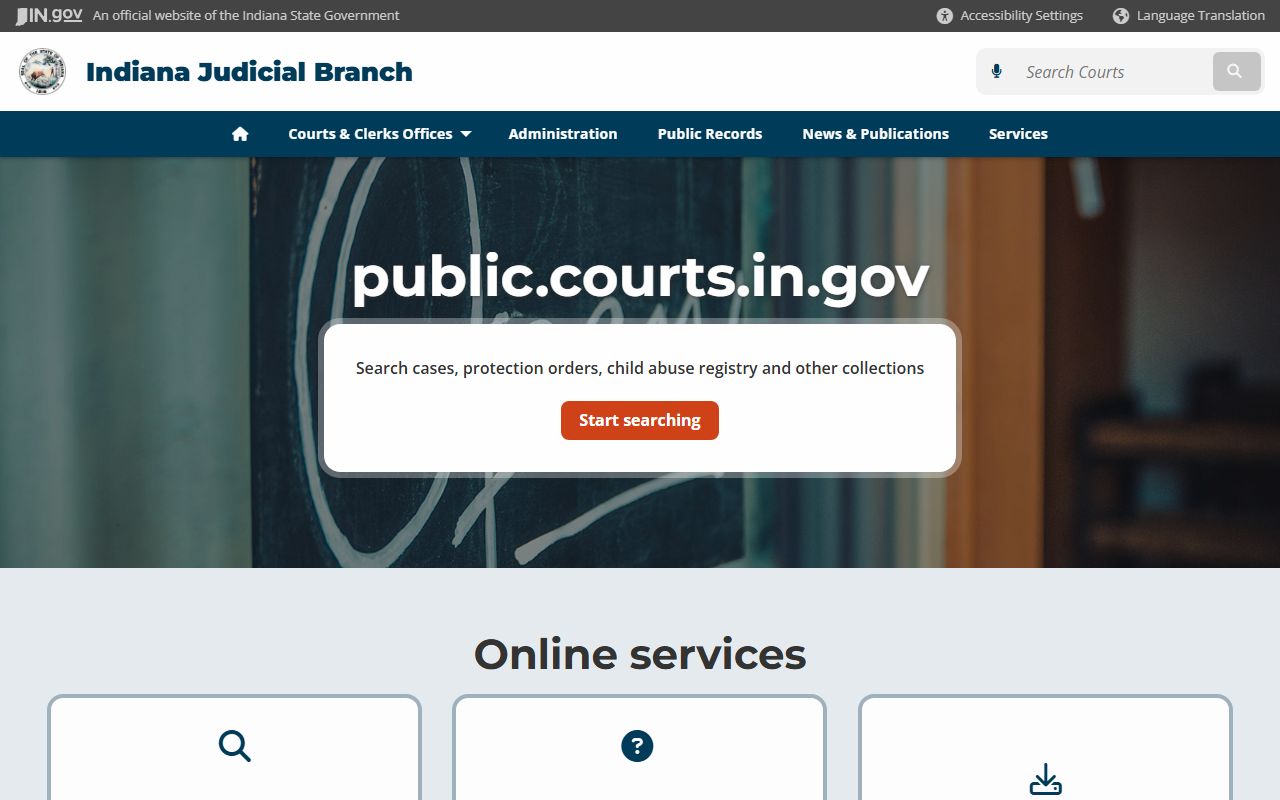
The public records page at in.gov/courts/public-records covers general rules for accessing court records in Indiana, including wills and estate files.
Historical Indiana Probate Records at the State Archives
For older probate court records not yet digitized online, the Indiana State Archives is the best resource. The Archives holds historical court records from many Indiana counties going back to statehood. Some Bartholomew County probate books from 1817 onward, Blackford County records from 1839, and other early county records are held there. The Archives is at 6440 E. 30th St., Indianapolis, IN 46219, and can be reached at (317) 591-5220.
The online research catalog for the Indiana State Archives is at researchIndiana.iara.in.gov. You can search this catalog to see what records are held for a specific county and time period. Bartholomew County, for example, transferred its old probate books to the Archives in August 2017. Many other counties have done the same for older records.
The ResearchIndiana portal screenshot below shows the state's online catalog of historical records, including probate court documents.
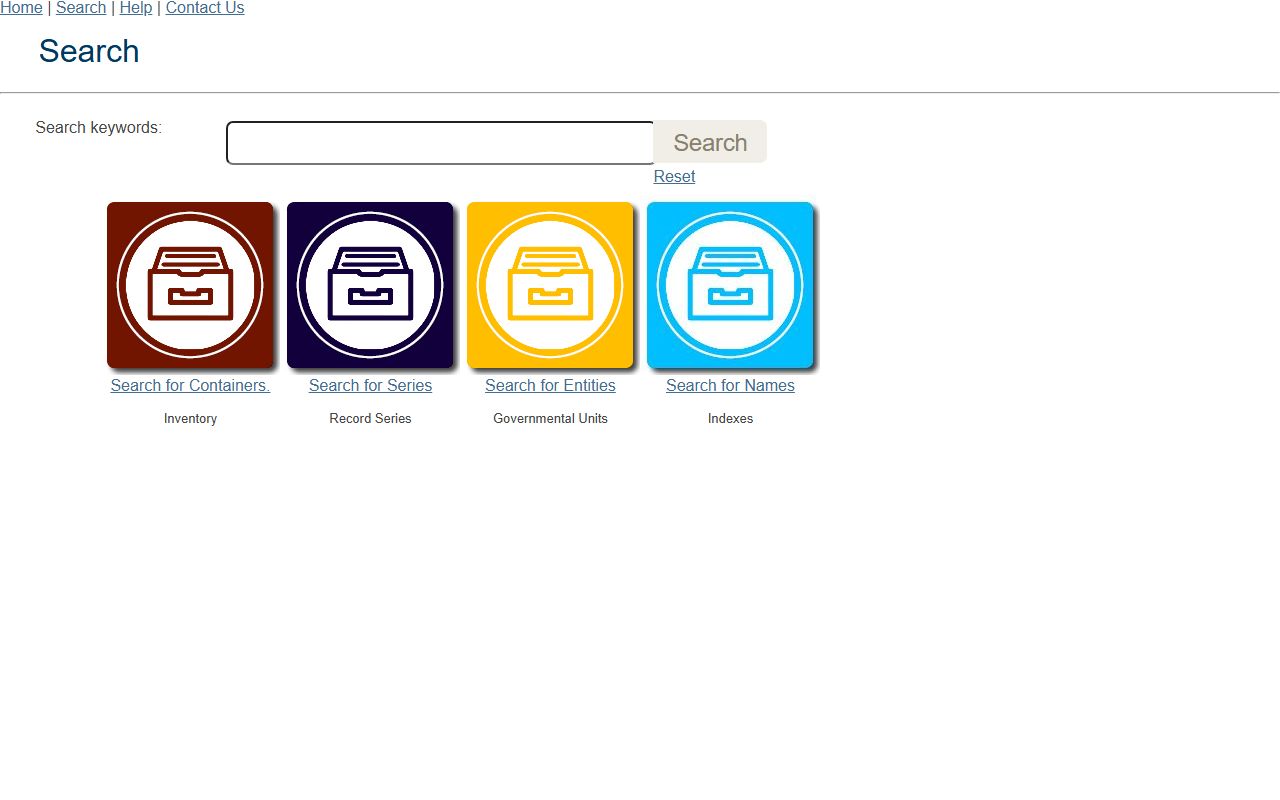
Use the Archives catalog to locate historical wills, estate inventories, and guardianship records from early Indiana counties.
How Indiana Probate Courts Are Organized
Indiana handles probate at the county level through Circuit Courts and Superior Courts. The Circuit Court in each county has original jurisdiction over probate matters. In some counties the Superior Court also handles probate cases. St. Joseph County (South Bend) is unique because it has a dedicated Probate Court separate from the Circuit and Superior Courts.
Under Indiana Code IC 29-1-7-1, the venue for probating a will and administering an estate is in the county where the decedent had their domicile at the time of death. If the person was not domiciled in Indiana at death, venue lies in any Indiana county where they owned property. This rule means probate records for an Indiana resident will always be in their home county, not necessarily where they died or owned the most property.
IC 29-1-7-3.1 gives people a way to deposit wills with the Circuit Court Clerk before death. A testator can leave their will with the clerk in the county where they reside, who keeps it in a sealed envelope until the testator dies or asks for it back. These deposited wills become part of the county's official court records when the estate is opened.
Indiana also allows unsupervised estate administration under IC 29-1-7.5. This lets personal representatives administer an estate without constant court oversight. It is a common and faster path for straightforward estates. The probate court records created through unsupervised administration are still public and held by the county clerk.
The local Indiana courts directory screenshot shows the index of all county court pages on the state judiciary website.
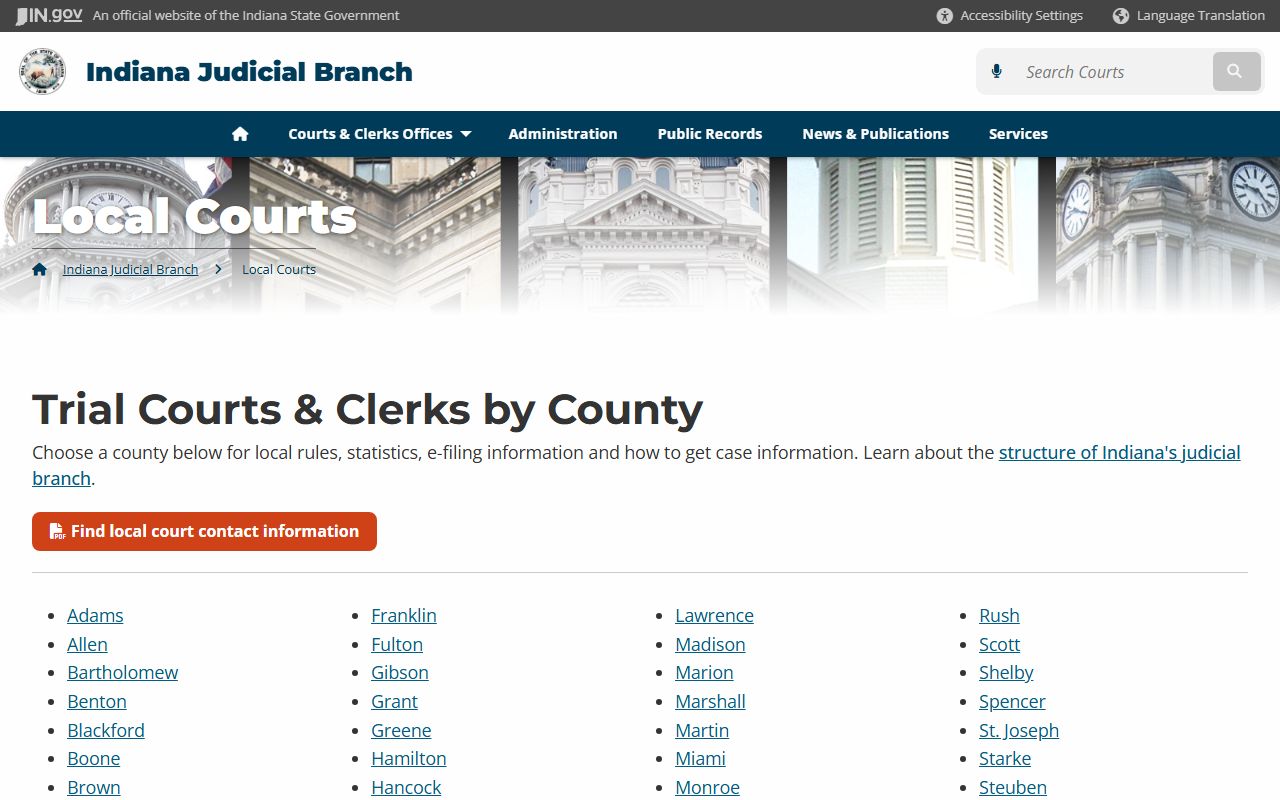
Each county's court page on the Indiana Judicial Branch site links to local probate court contact information and online search tools.
Types of Indiana Probate Court Records
Indiana probate court records cover a wide range of matters. The most common are estate administration files. When a person dies leaving a will, the executor petitions the Circuit Court to open probate and admit the will. When someone dies without a will, an administrator is appointed by the court. Both supervised and unsupervised estates create public court files with petitions, inventories, and final accountings.
Wills are one of the most searched probate court records. Indiana allows wills to be deposited with the county clerk for safekeeping during a testator's lifetime. Once probate opens, the will becomes part of the court file and is available to any member of the public. Certified copies of wills cost $1.00 per page plus a $3.00 certification fee under IC 33-37-5-1 and IC 33-37-5-3.
Guardianship records are another major part of Indiana's probate court records. Under IC 29-3, guardianships over minors or incapacitated adults go through the Circuit Court. The records include petitions, evaluations, court orders, and annual reports filed by guardians. These records are largely public though some personal health information may be restricted.
Trust proceedings that require court involvement are also part of county probate court records. Marriage license records are held by the county clerk as well, though they are not technically probate records. The clerk also maintains adoption records, which are sealed from public access under Indiana law.
The MyCase search portal screenshot below shows Indiana's public case search system where probate cases can be looked up by name or case number.
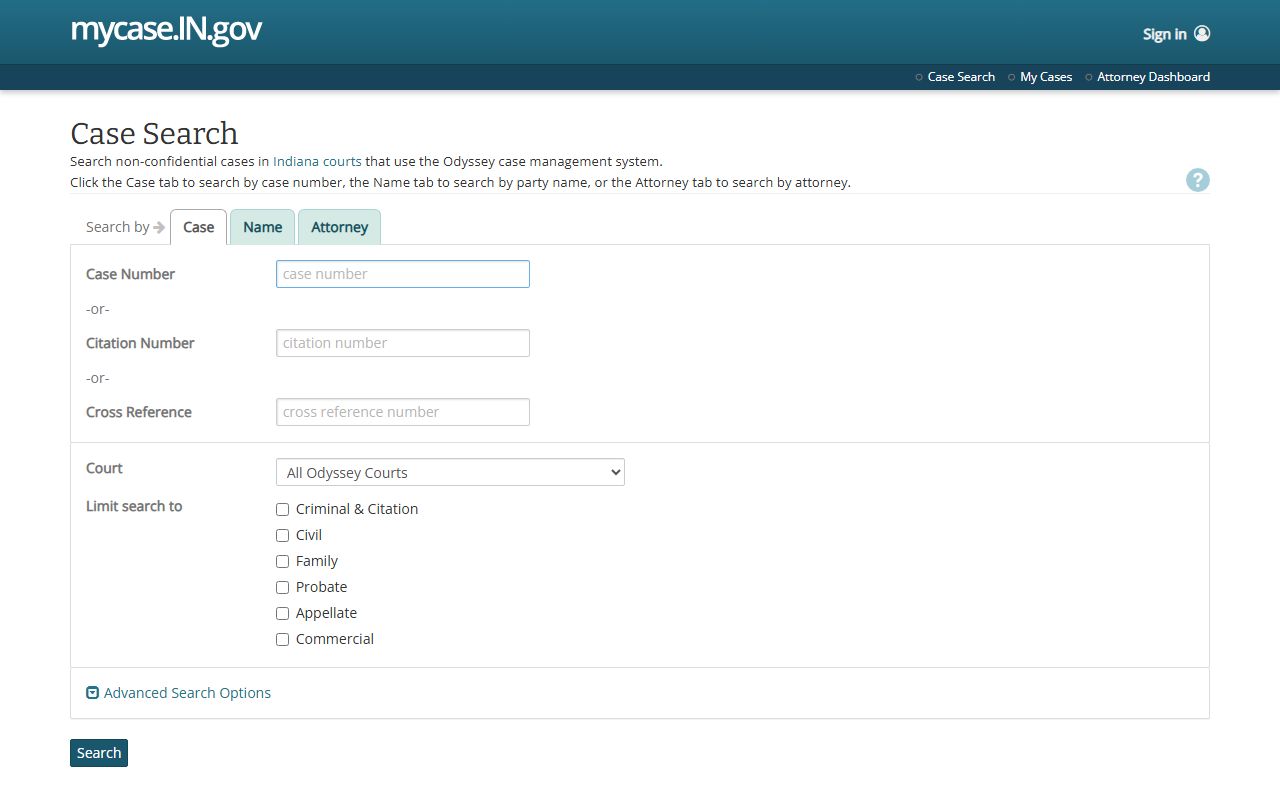
The MyCase portal is the primary free tool for searching active and recent Indiana probate court records from any county using Odyssey.
Fees for Indiana Probate Court Records
Filing fees and copy fees for probate court records in Indiana are set by state statute. The standard total for opening a probate estate runs about $177. This breaks down as: $120 Probate Costs Fee (IC 33-37-4-7), $20 Automated Record Keeping Fee, $20 Judicial Salaries Fee, $5 Court Administration Fee, $5 Document Storage Fee, $5 Public Defense Administration Fee, $1 Judicial Insurance Adjustment Fee, and $1 Pro Bono Legal Services Fee.
Copy fees are uniform across Indiana. Regular copies cost $1.00 per page under IC 33-37-5-1. Certified copies cost $1.00 per page plus $3.00 per document for certification under IC 33-37-5-3. Payment rules vary by county. Some clerks accept only cash, certified checks, or money orders. Many do not accept personal checks. Call ahead to confirm payment methods before visiting any county court office.
Online payments for court costs and fines can be made through the state's payment portal at publicaccess.courts.in.gov/pay.
Note: Fees are set by the Indiana General Assembly and may be adjusted. Always contact the specific county clerk to confirm current amounts before submitting any request or payment.
The Indiana courts online payment system screenshot shows where fees and fines for court matters, including probate case costs, can be paid across the state.
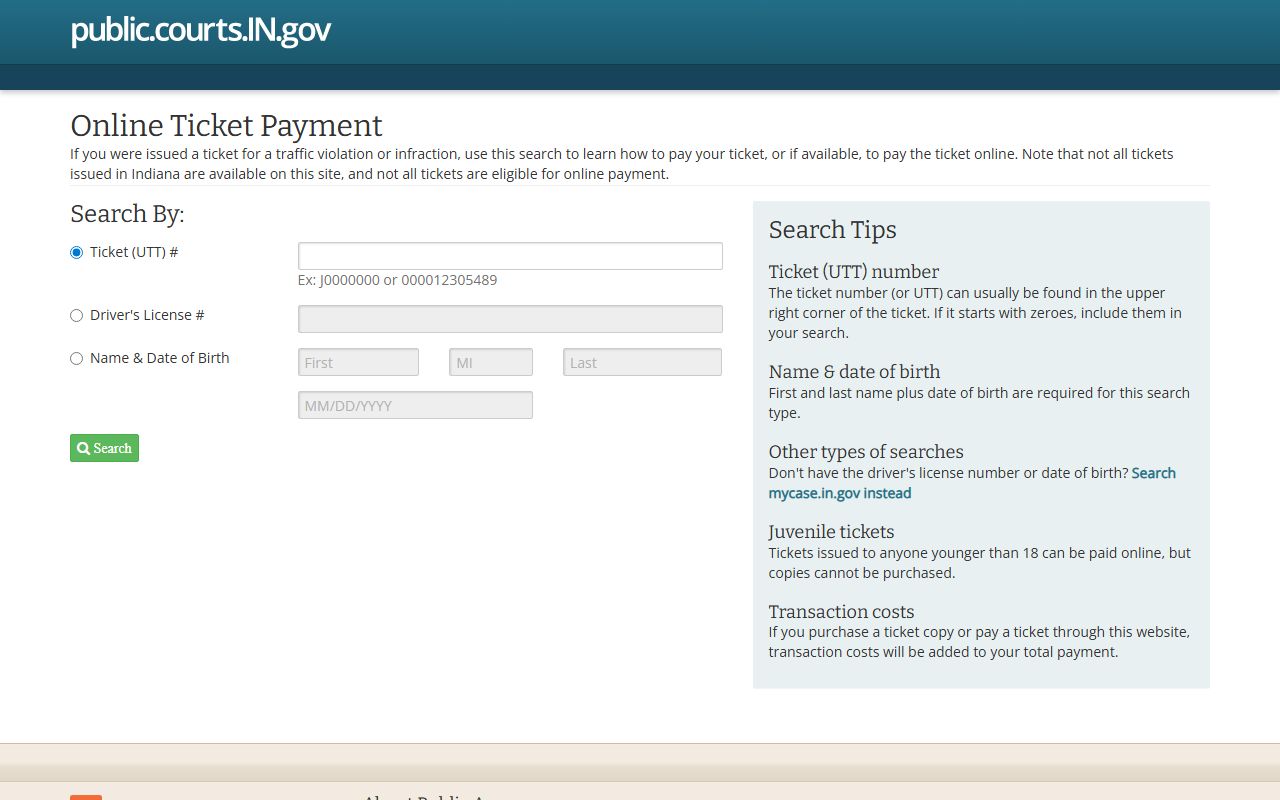
Most Indiana counties accept online payment through this portal for various court costs, including fees related to probate filings and record requests.
How to Get Indiana Probate Court Records
There are three main ways to get probate court records in Indiana. Online search through MyCase is the fastest option for most people. In-person visits to the county clerk allow you to view original files and get certified copies on the spot. Mail requests are also accepted by most Indiana county clerks, though turnaround times vary.
For online searches, start with the free MyCase portal at public.courts.in.gov/mycase. Enter the name of the deceased person or case number. You can view case information and download available documents at no charge. For documents not available online, note the case number and contact the county clerk directly. The Doxpop service at doxpop.com also provides access to records from many Indiana counties and is used by some counties as an alternative or supplement to MyCase.
In-person requests work best for older records, certified copies, or cases filed before a county began using Odyssey. Bring a valid photo ID and payment in the accepted form for that county. Most Indiana county clerk offices are open Monday through Friday, typically 8:00 AM to 4:00 PM or 4:30 PM, with some variation.
For historical records predating digitization, contact the Indiana State Archives at (317) 591-5220 or search the online catalog at researchIndiana.iara.in.gov. Many counties have transferred old probate books to the Archives, especially records from the 1800s and early 1900s.
The Indiana county courts screenshot shows the local courts listing where you can navigate to any county's specific court page and clerk contact information.
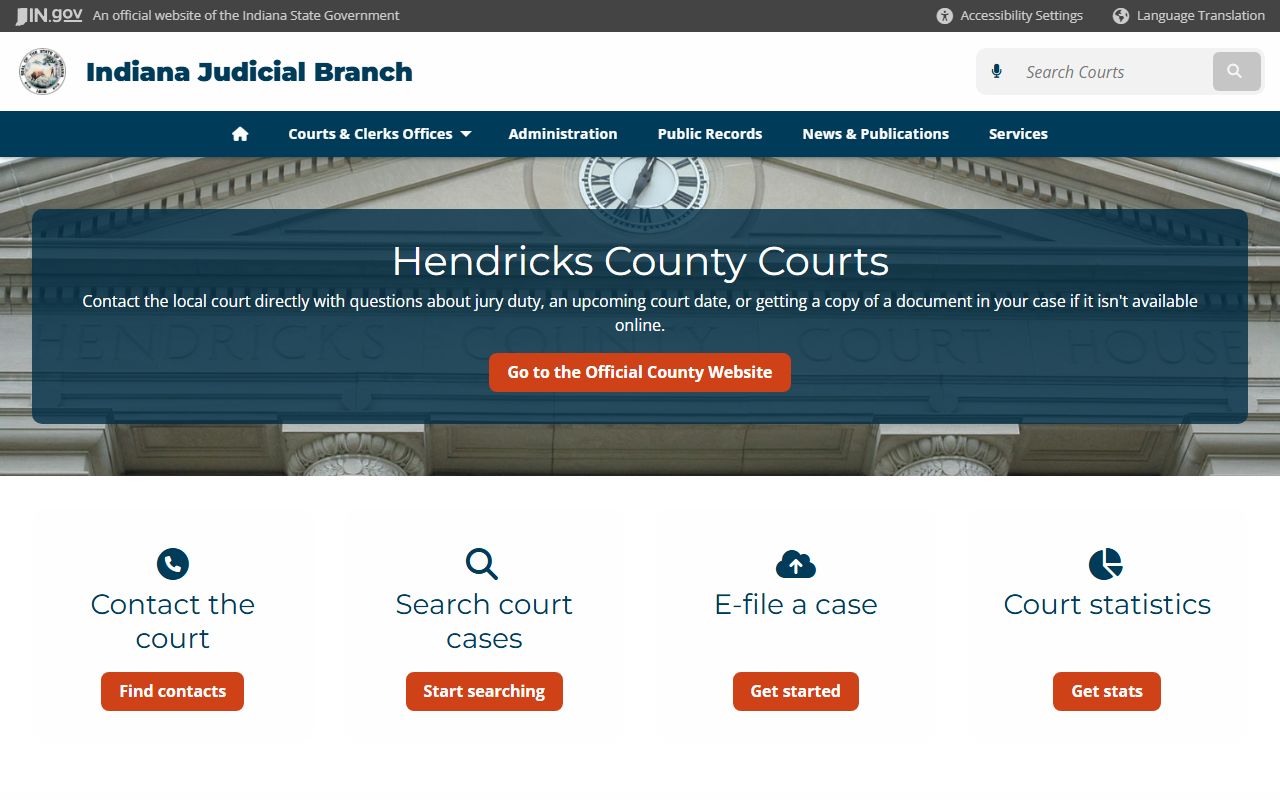
Each county page on the state courts site links directly to the local clerk's contact details, online search tools, and filing information for that county's probate records.
Browse Indiana Probate Court Records by County
All 92 Indiana counties maintain their own probate court records at the county courthouse. Select a county below to find the local Circuit Court Clerk's contact details, online access options, and specific instructions for requesting probate records in that county.
Probate Court Records in Major Indiana Cities
Residents of Indiana's largest cities file probate cases at their county Circuit Court. The city itself does not maintain probate records. Pick a city below to find which court handles that city's probate matters and how to access those records.